The Monthly Payment Effect: Interest Rates
How Interest Rates and Home Prices Affect Your Monthly Payment
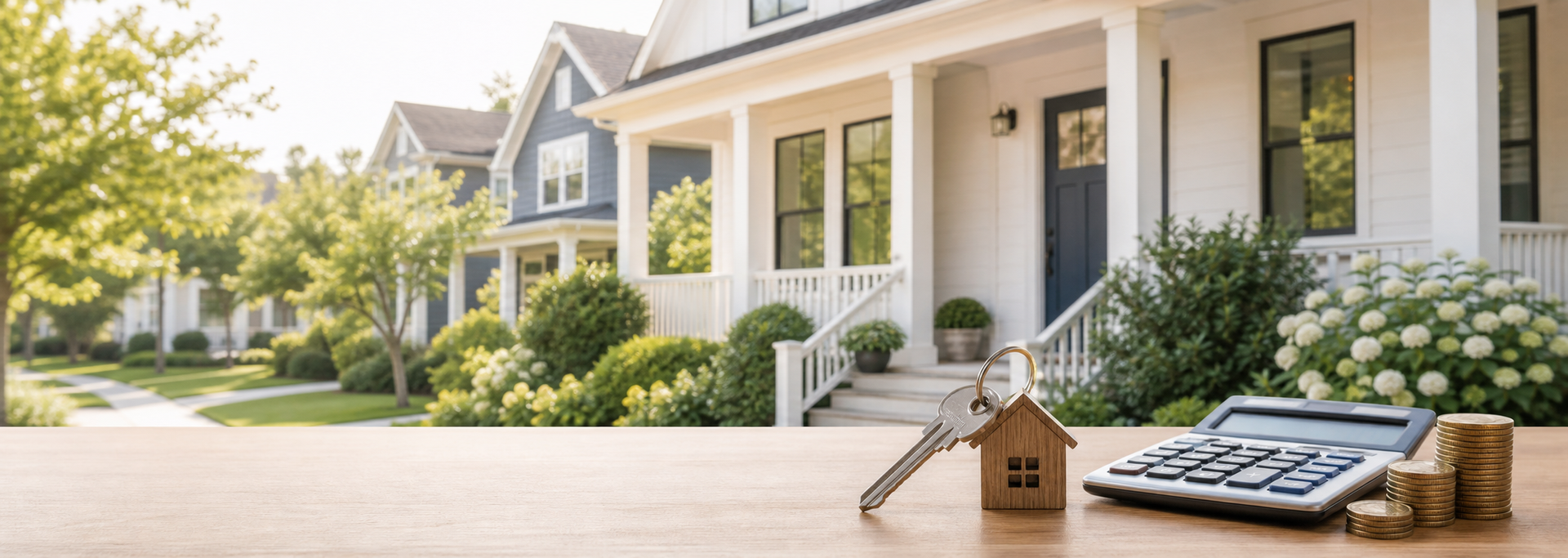
When mortgage rates change, buyers often wonder whether they should adjust their budget or put their plans on hold.
The good news is that you do not need to become a mortgage expert to make a smart decision. The most helpful place to start is understanding how the interest rate and purchase price affect your monthly payment.
What Does Another $10,000–$20,000 Really Cost?
A home’s price can feel like one very large number. It is often easier to think about the difference as a monthly expense.
Using a 6.5% interest rate on a 30-year fixed mortgage, every additional $10,000 borrowed adds approximately $63 per month to the principal-and-interest payment. An additional $20,000 borrowed adds about $126 per month.
Additional amount borrowed $10,000. $20,000
Approximate payment increase$63 per month $126 per month
| Additional Amount Borrowed | Estimated Payment Increase |
|---|---|
| $10,000 | $63 per month |
| $20,000 | $126 per month |
| $30,000 | $189 per month |
| $40,000 | $252 per month |
For example, imagine that you are comparing two homes and one costs $20,000 more. If you finance the entire difference, the higher-priced home would add about $126 to your monthly principal-and-interest payment.
That does not mean you should automatically choose the more expensive home. It simply gives you a more useful way to compare your options. If the higher-priced home offers the location, space, condition, or features you truly need, you can decide whether the additional monthly expense fits comfortably within your budget.
These estimates assume the entire additional amount is financed. If you make a down payment, the monthly increase will be lower.
How Interest Rates Affect Buying Power
The interest rate determines how much it costs to borrow money for a home. When rates rise, the payment for the same loan amount increases. When rates fall, the payment generally decreases.
A higher interest rate does not necessarily make buying a home impossible. It may mean adjusting your price range, comparing loan options, increasing your down payment, or asking whether the seller can help with certain costs.
The goal should not be to spend the highest amount a lender will approve. It should be to find a monthly payment that works for your lifestyle and long-term plans.
Look Beyond the Listing Price
Your mortgage is an important part of the cost of owning a home, but it is not the only expense.
Your complete monthly housing budget may include:
- Principal and interest
- Property taxes
- Homeowners insurance
- Mortgage insurance, if required
- Homeowners association fees
- Utilities and routine maintenance
You should also keep some savings available for unexpected repairs and other expenses after closing.
A lender may approve you for a certain amount, but you do not have to spend that much. A comfortable housing payment should still leave room for savings, emergencies, travel, hobbies, and the other things that are important to you.
Should You Wait for Interest Rates to Fall?
Waiting for lower rates may sound like a safe strategy, but mortgage rates are difficult to predict. If rates fall, more buyers may enter the market. That could create additional competition and put upward pressure on home prices.
Instead of trying to time the market perfectly, focus on your personal situation:
- Is the complete monthly payment manageable?
- Do you expect to remain in the home for several years?
- Will you still have savings after closing?
- Does the home meet your current and future needs?
If the answers are yes, buying may make sense even if rates are not at their lowest. If rates decrease in the future, refinancing may be an option, although approval is not guaranteed and refinancing usually comes with additional costs.
Simple Ways to Improve Affordability
If the estimated payment feels higher than expected, you may have several options:
- Compare lenders. Rates, fees, and closing costs can vary.
- Explore different loan programs. Conventional, FHA, VA, USDA, and other programs offer different benefits and requirements.
- Ask about seller assistance. In some situations, a seller may contribute toward closing costs or help reduce the interest rate.
- Adjust your price range. Borrowing $10,000–$20,000 less could reduce the principal-and-interest payment by approximately $63–$126 per month at a 6.5% rate.
- Stay flexible about cosmetic details. A home that needs paint or simple updates may offer better value than one that has already been fully renovated.
The Right Home Starts With the Right Payment
Interest rates matter, but they are only one part of the decision. The right home should meet your needs while providing a monthly payment you feel confident managing.
At Halo Real Estate, we help buyers understand what changing rates and home prices mean for their individual goals. If you are considering a move, our team can help you evaluate your options and create a practical plan for moving forward.
Ready to explore what you can comfortably afford? Contact Halo Real Estate to start the conversation.
The payment examples in this article assume a 6.5% interest rate and a 30-year fixed mortgage. Estimates include principal and interest only. Actual payments will vary based on the interest rate, loan term, down payment, taxes, insurance, fees, mortgage insurance, homeowners association fees, and loan program. This article is provided for general educational purposes and is not financial, tax, or legal advice.
Share this post